
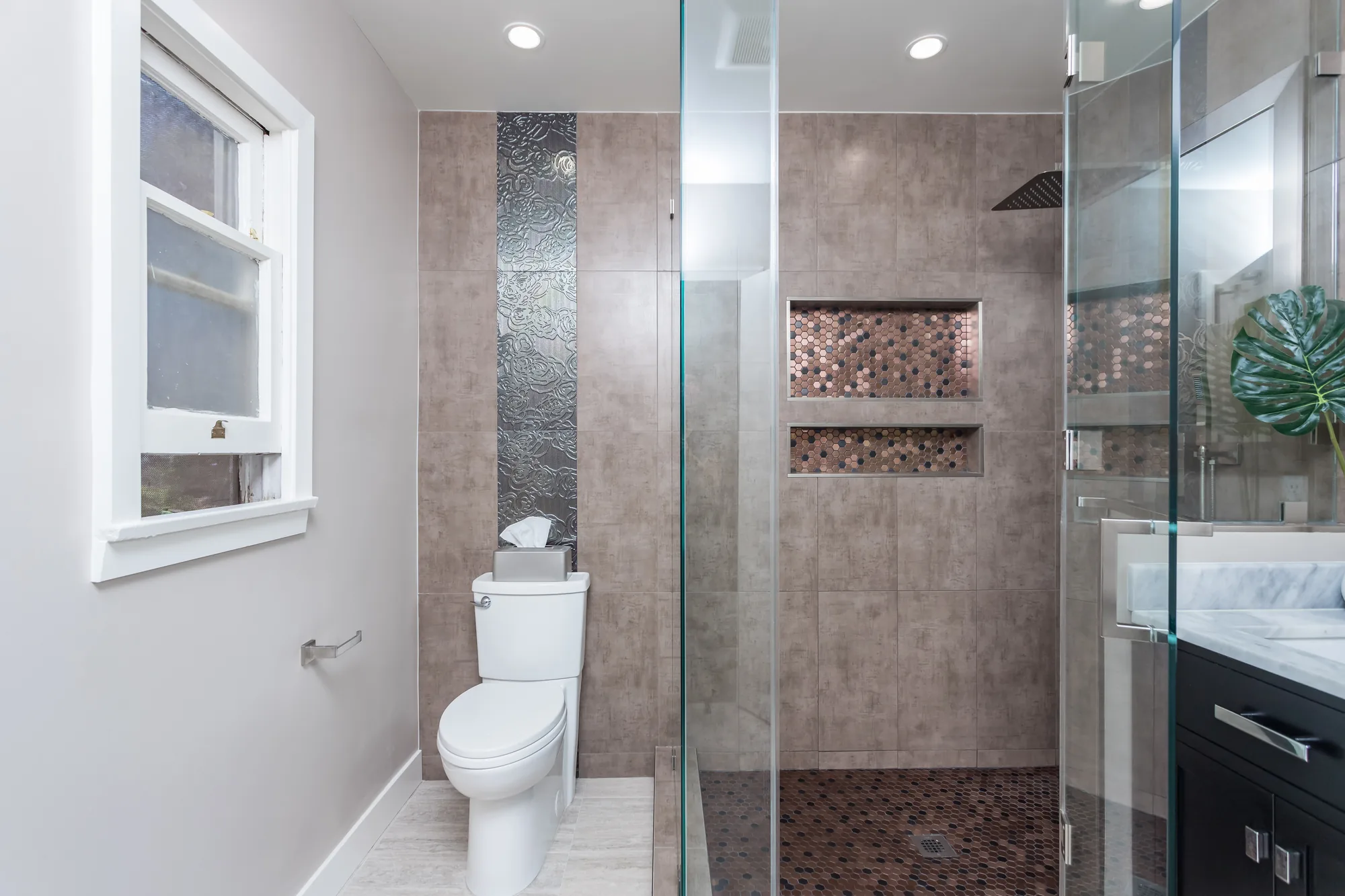
In the damp Pacific Northwest, preventing bathroom mold comes down to moving moist air out fast and keeping water out of the walls. Install an exhaust fan sized to the room, vent it fully outside rather than into the attic, waterproof properly behind tile, and choose moisture-tolerant materials. Run the fan during and after every shower to keep humidity low.
Why Bathroom Moisture Is a Bigger Deal in the Pacific Northwest
Our region’s cool, wet climate means homes stay damp for much of the year, and interior humidity has fewer chances to dry out. In a bathroom, every shower releases a burst of warm, moist air that condenses on cooler walls, ceilings, mirrors, and inside wall cavities. Without a way to move that moisture out quickly, it lingers, and persistent dampness is exactly what mold and mildew need to take hold.
That’s why ventilation deserves real attention in any Pacific Northwest bathroom remodel. Getting it right protects your finishes, your framing, and your indoor air quality for years.
Sizing and Choosing the Right Exhaust Fan
An exhaust fan only helps if it can actually clear the room’s air. A common rule of thumb is to match the fan’s airflow, measured in CFM (cubic feet per minute), to the room, roughly one CFM per square foot of floor area for a standard ceiling, and to size up for larger, enclosed, or high-ceilinged bathrooms, jetted tubs, or steam showers.
A few features make a real difference in our climate. A quiet fan (measured in sones) is one you’ll actually run, and a humidity-sensing or timer-equipped model keeps clearing air after you leave. In most cases, code requires mechanical ventilation in a bathroom without an operable window, but requirements vary, so confirm the specifics with your local building department or a contractor familiar with local code.
Vent It Outside, Not Into the Attic
This is the single most common ventilation mistake we see: a fan that dumps humid air straight into the attic or a wall cavity. All that moisture then condenses on cold roof sheathing and framing, which can lead to mold, rot, and ruined insulation, often hidden until it becomes a real problem.
An exhaust fan should be ducted all the way to the exterior, typically through the roof or a sidewall, with a proper termination cap that keeps rain and pests out. Insulated, smooth duct with short, direct runs moves air better and reduces condensation inside the duct itself. If your remodel touches ventilation, confirm that the duct actually terminates outside. Verifying this one detail is cheap insurance against expensive damage.
Waterproofing and Moisture-Tolerant Materials
Ventilation handles the air; waterproofing handles the water. Behind a tiled shower, tile and grout are not waterproof on their own. The real protection is the membrane and pan system underneath. Done right, that assembly keeps water out of the framing and subfloor even when the surface stays wet.
Material choices matter too. In wet zones, moisture-resistant backer board belongs behind tile instead of standard drywall, and paints, trim, and cabinetry rated for humidity hold up better over time. These waterproofing details should be planned into any bathroom renovation from the start, because they are what separate a bathroom that still looks great in ten years from one that quietly develops problems.
Habits and Maintenance That Keep Mold Away
Even a well-built bathroom needs a little help staying dry:
- Run the exhaust fan during every shower and for a stretch afterward; a timer or humidity sensor makes this automatic.
- Wipe down or squeegee glass and tile to cut standing moisture.
- Leave the shower door or curtain open to dry between uses.
- Reseal grout and caulk as needed, and address any leaks or discoloration early.
- Keep the fan cover clean so it moves air at full capacity.
Planning a moisture-smart bathroom in Bothell or elsewhere on the Eastside? Our team designs bathrooms built to handle the PNW climate from the studs out. Call Sky Pro Remodeling at (206) 825-2773 to schedule a free estimate.
Frequently Asked Questions
How long should I run the bathroom fan after a shower?
As a general guideline, keep the fan running for roughly 15 to 20 minutes after you finish, so the lingering humidity has time to clear. A fan with a built-in timer or a humidity sensor handles this automatically, which is the most reliable way to keep moisture from settling into walls and ceilings.
Can a bathroom fan vent into the attic?
No. Venting into the attic dumps warm, moist air onto cold roof framing and insulation, where it condenses and can cause mold and rot. An exhaust fan should always be ducted fully to the exterior with a proper termination cap. If you’re unsure where yours vents, have it checked.
What size exhaust fan do I need?
A common rule of thumb is about one CFM of airflow per square foot of floor area for a standard ceiling, sized up for larger, enclosed, or high-ceilinged bathrooms and for steam showers or jetted tubs. Because layouts vary, it’s best confirmed during design so the fan actually clears the room.
Is a window enough for bathroom ventilation?
An operable window can help, but it isn’t reliable, since people rarely open it in cold, wet weather. A properly sized, exterior-vented exhaust fan clears moisture far more consistently. In most cases, code requires mechanical ventilation regardless, so verify the requirement with your local building department.
Get a Free Estimate from Sky Pro Remodeling
Serving Bellevue, the Eastside, and greater Seattle. Tell us about your project and we’ll help you plan the next step.