A roof in the Puget Sound region is a water management system first and a design element second. Sky Pro Remodeling installs complete roofing assemblies for Bellevue and Eastside homes, from tear-off and deck repair through flashing, ventilation and finished roofing. We plan the work around the weather so your house is dried in before the next front arrives.
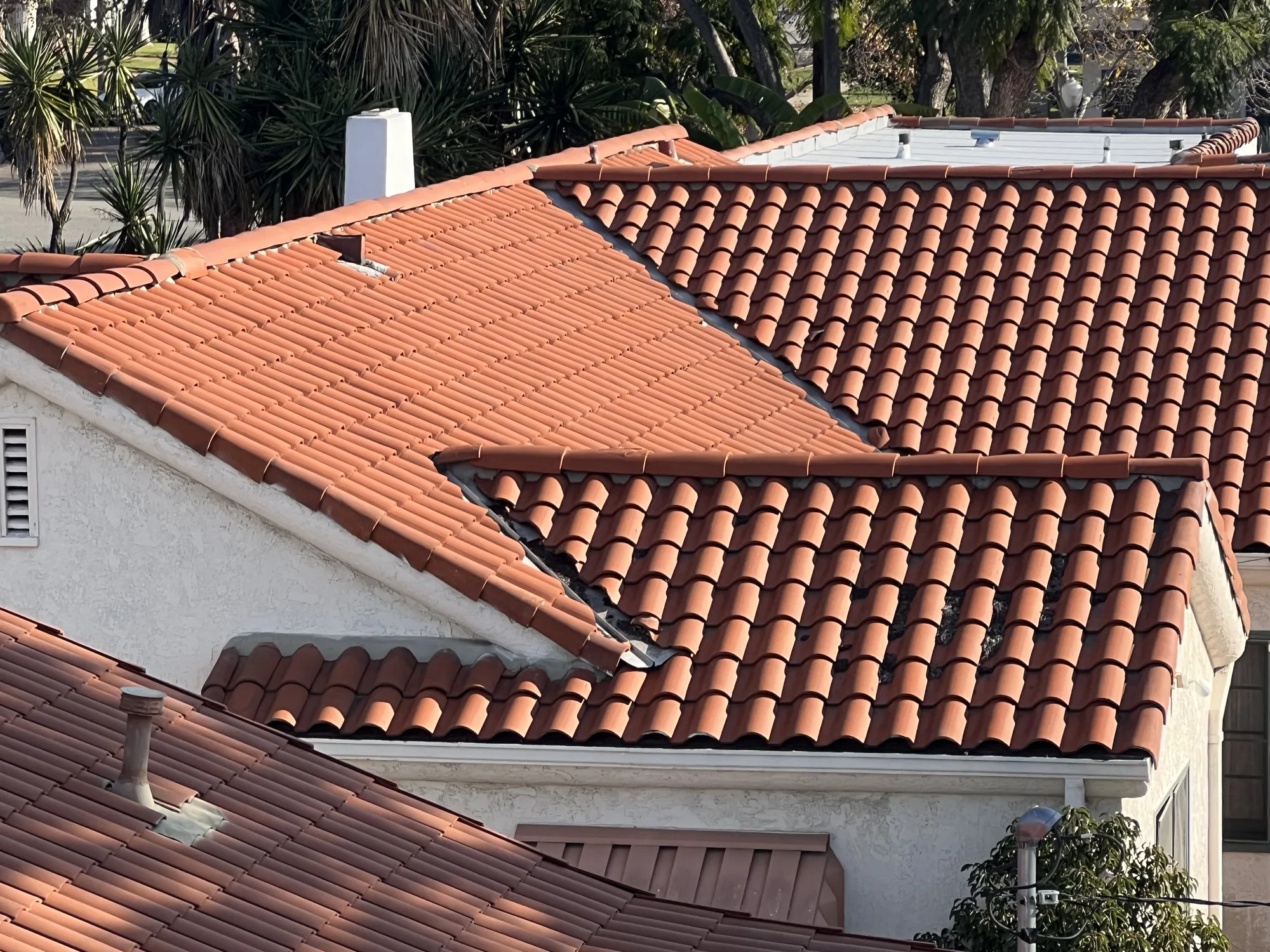
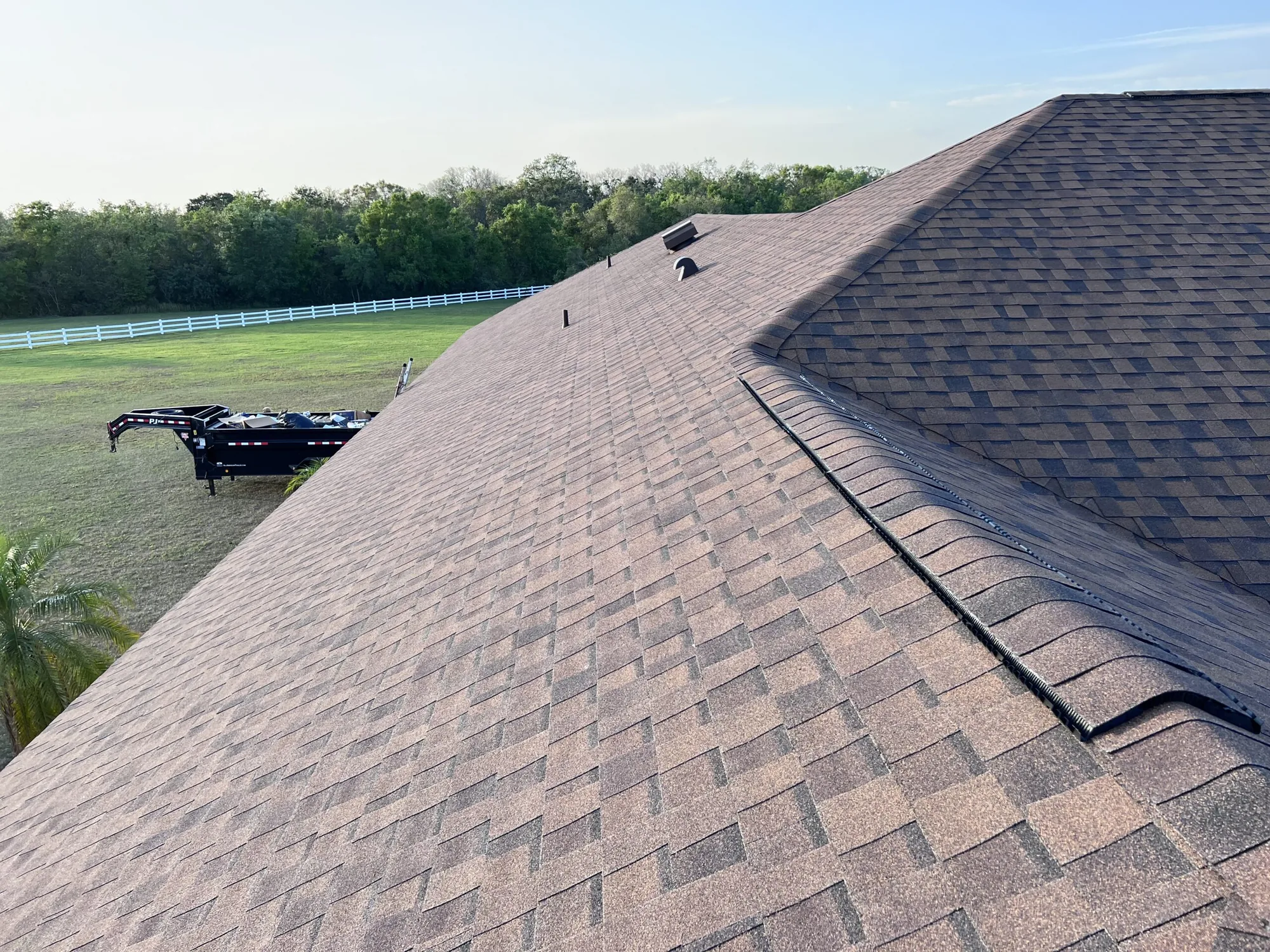
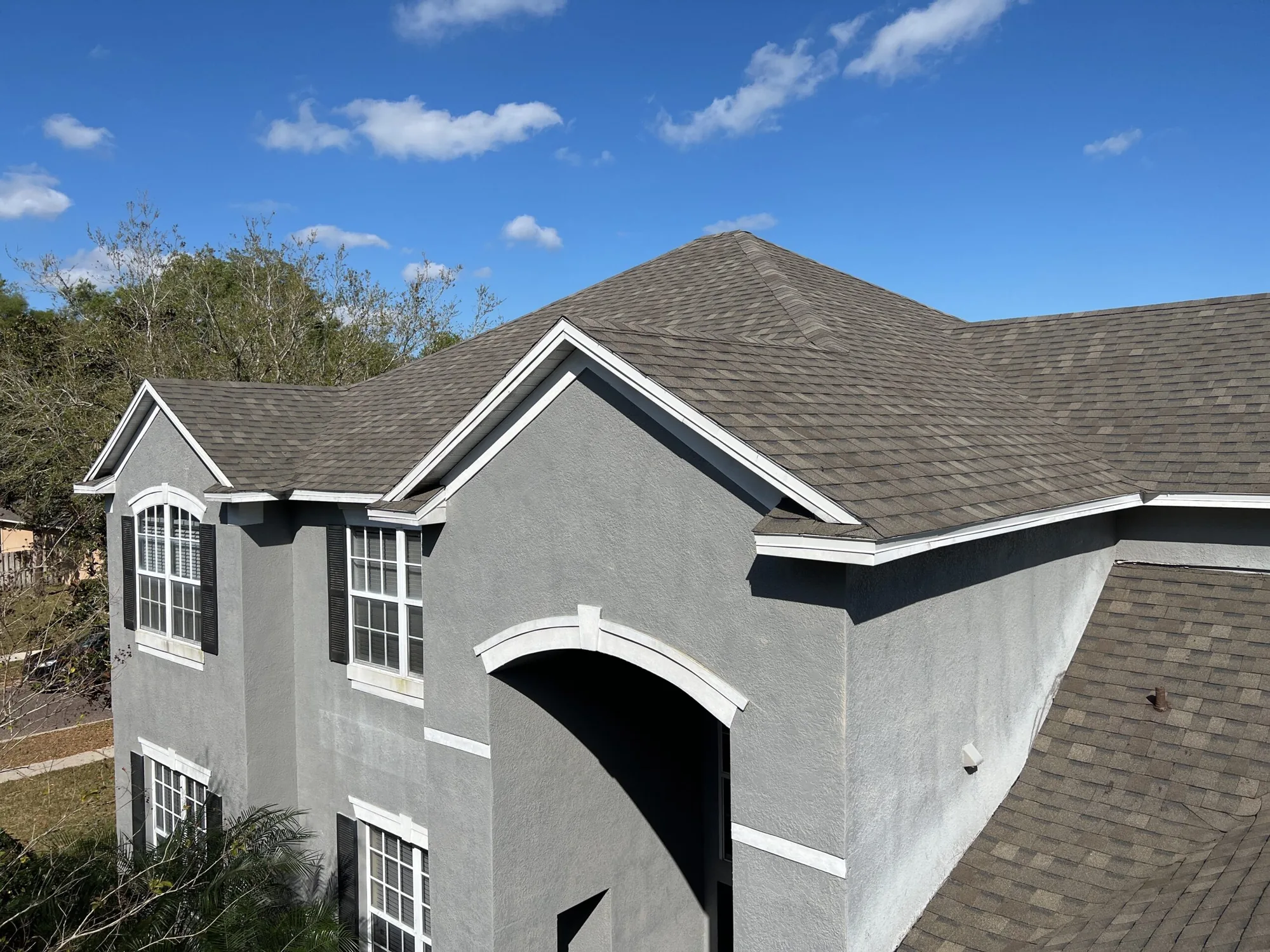
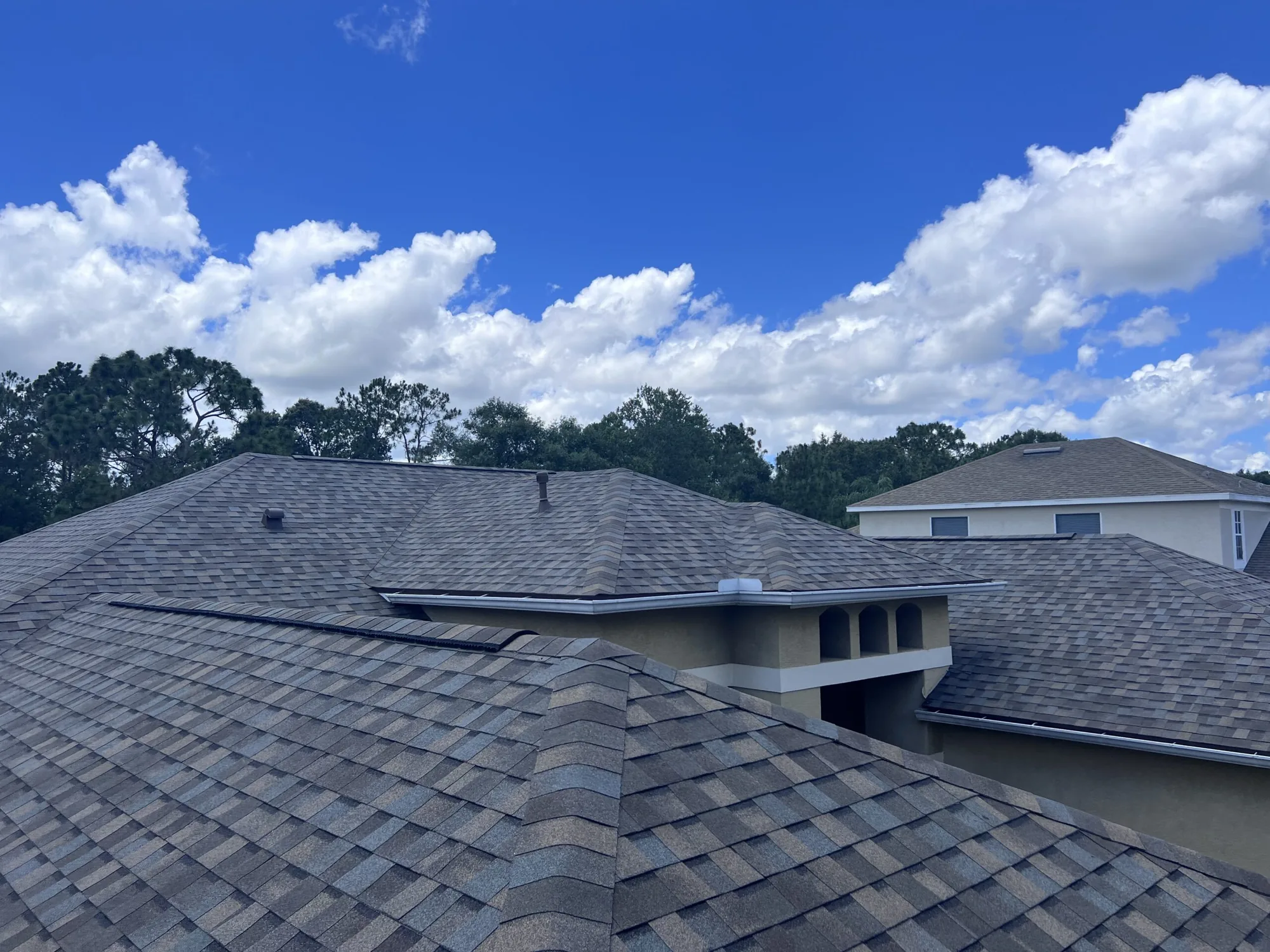
Roofing products are rated in a laboratory, not in a maritime climate that delivers steady rain for months at a time, long stretches of shade, and very little drying heat. In Bellevue and the surrounding Eastside, roofs rarely fail because the shingle wore out from sun exposure. They fail at the details: a valley that was never lined properly, a step flashing that was caulked instead of woven into the siding, a bathroom fan venting into the attic, or moss that has quietly lifted the courses on a north-facing slope shaded by a fir.
That is why we treat roof installation as an assembly rather than a product. Underneath the visible roofing there is a structural deck, an underlayment layer, edge metal, valley protection, penetration flashings, and a ventilation path from the soffits to the ridge. Every one of those components has to work with the others. If the intake vents are blocked by insulation and the ridge vent is doing all the work, the attic pulls conditioned air out of the house and the underside of the deck stays damp through the winter. The roofing on top can be the best available and the assembly will still underperform.
Housing stock on the Eastside adds its own wrinkles. Homes built in the mid-century era often carry skip sheathing left over from an original cedar shake roof, which means a switch to asphalt or composite requires a full solid deck before anything else happens. Additions and dormers added over the decades frequently create low-slope sections that were shingled when they should have been membraned. We look for those conditions during the inspection, before a number is put on paper, so the scope reflects what is actually on the house.
The shape of your roof drives labor, detailing and long-term risk more than most homeowners expect.
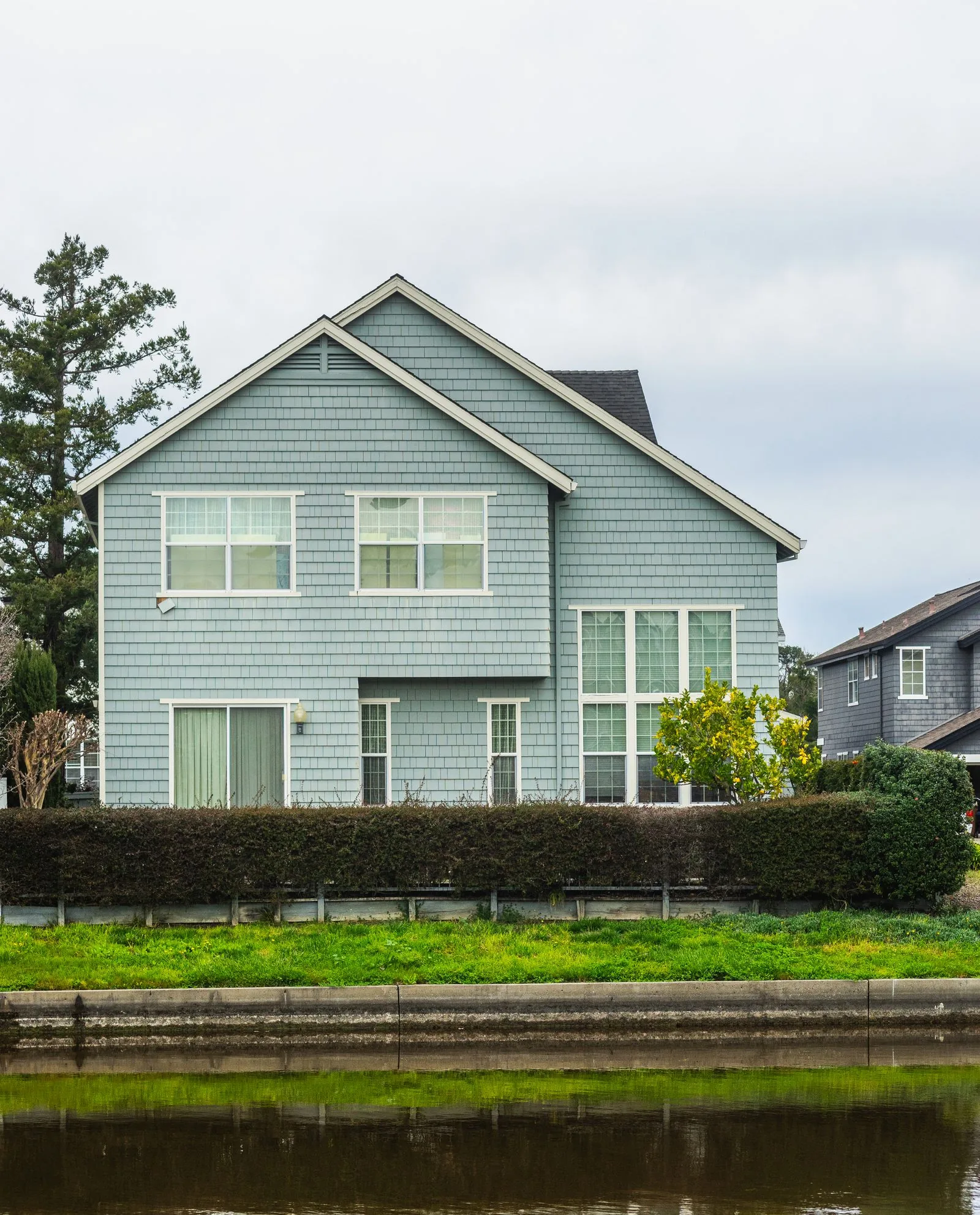
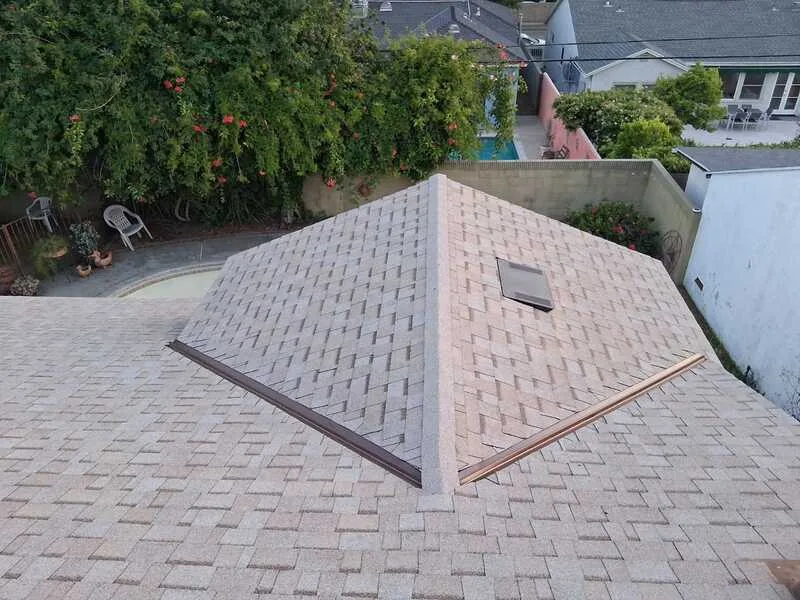
Two planes meeting at a straight ridge, common on older Eastside neighborhoods and newer builder homes alike. It is the most efficient roof to install and the easiest to ventilate with a continuous ridge vent. The design consideration is rake edge detailing, since long unbroken rakes are exposed to wind-driven rain off the water.
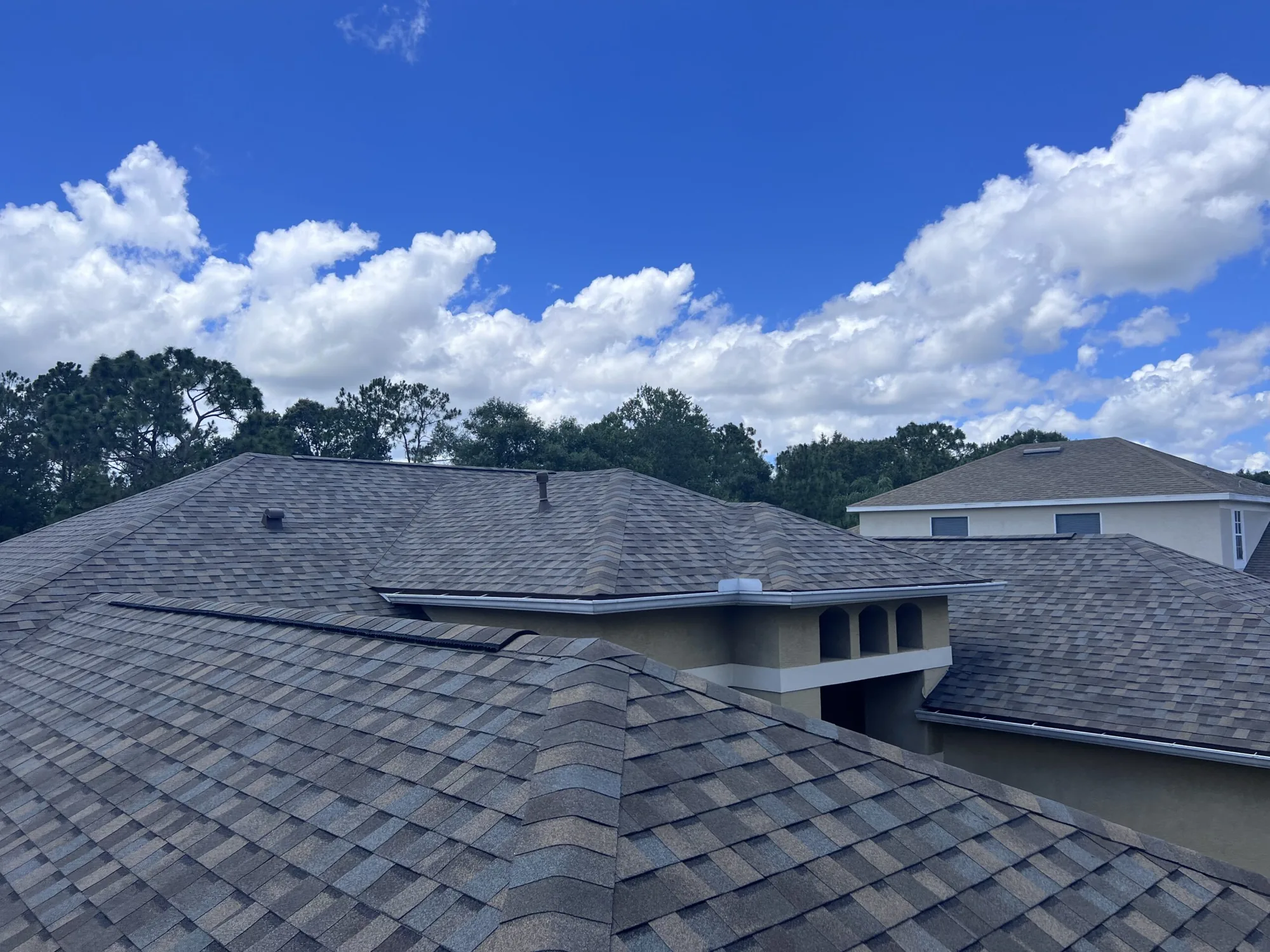
Multiple planes, hips and valleys give a house depth and shed water quickly from any direction. They also multiply the number of transitions, and valleys concentrate runoff from two slopes into one path. Ridge length is shorter on a hip roof, so exhaust ventilation often needs supplementing rather than relying on the ridge alone.
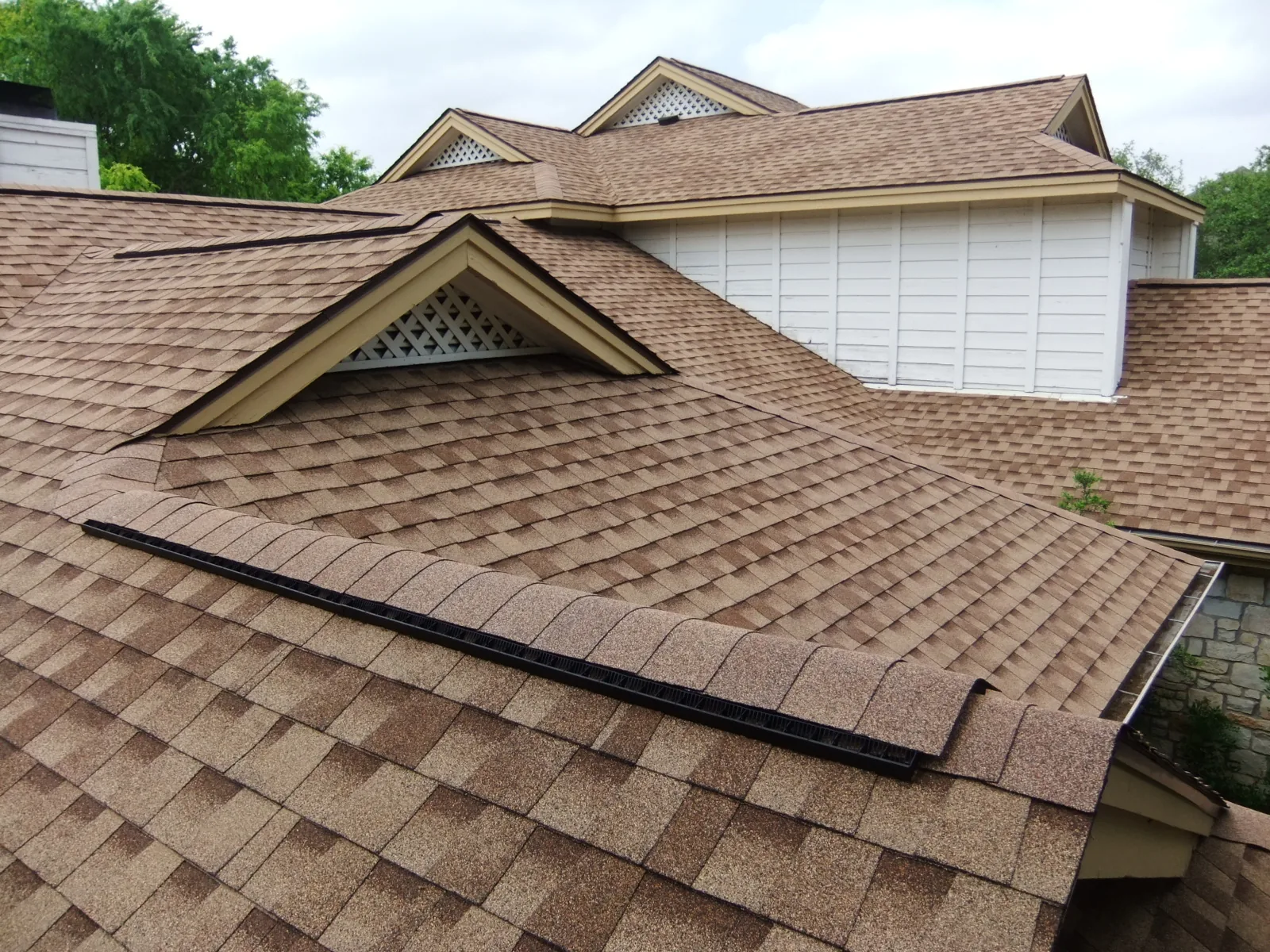
Dormers add light and headroom upstairs and are common on Craftsman and traditional Northwest designs. Each dormer introduces roof-to-wall intersections that need step and kickout flashing integrated with the siding. Where dormer cheeks meet the main roof, the siding usually has to be opened up to flash correctly, which should be in the scope from the start.
Covered entries, rear additions and shed dormers frequently fall below the pitch where shingles are permitted to perform. These areas belong in a single-ply or torch-applied membrane, tied into the steep-slope roofing above with a proper transition. Ignoring the pitch change here is one of the most common causes of persistent leaks over an entry or a sunroom.
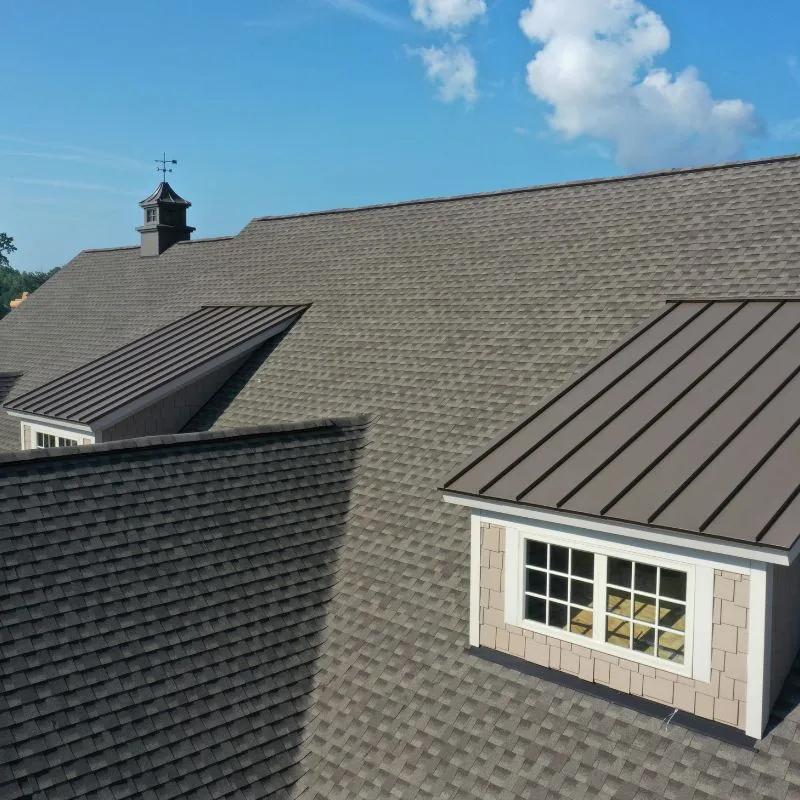
Using standing seam metal on porches, bays or shed sections while the main field stays asphalt or composite is a practical and attractive approach. The metal handles the low-slope or high-visibility areas and the field material keeps the overall cost reasonable. The transition detail between the two systems needs to be designed rather than improvised.
If panels are on the roof or in your plans, the roofing and the array should be sequenced together. Removing and resetting an existing array adds cost, and installing panels on a roof near the end of its life guarantees paying that cost twice. Mounting locations and flashed penetrations are best established while the roof is open.
The sequence below is what a straightforward residential roof replacement looks like on our schedule.
We get on the roof where it is safe to do so, check the attic from the inside, and look at the gutters, fascia and any staining on ceilings below. Attic inspection is the part most homeowners skip and it tells us more about ventilation and past leaks than the surface ever will.
You receive a written scope that names the material, underlayment, flashing approach and ventilation plan, along with how deck repair is handled if rot is found. Sheathing replacement is usually carried as a unit rate because nobody can see under the old roofing until it comes off.
We confirm what the local jurisdiction requires for the specific scope, since Bellevue, neighboring Eastside cities and unincorporated King County do not all handle roofing the same way. Meanwhile you finalize color and profile, ideally by looking at full boards outdoors rather than a small sample indoors.
Landscaping, decks, patios and vehicles are covered or moved, and we set up debris containment near the drive. Materials are staged so the crew is not walking loads across the yard for two days.
Old roofing comes off in sections rather than all at once, which limits how much deck is exposed at any moment. As each section is stripped, we probe and mark the sheathing and replace what has failed before anything goes back down.
Underlayment, self-adhered membrane at valleys and eaves, and edge metal are installed the same day a section is opened. Getting the house watertight before the crew leaves each day is the single most important scheduling rule for roofing in this region.
The finished roofing goes on with new flashings at every penetration and transition, not reused metal. Ridge and intake ventilation are completed as part of this stage rather than added later as an afterthought.
We clear gutters of tear-off debris, sweep the perimeter with a magnet, and walk the roof and attic with you so you can see the finished details. Warranty documentation and product registration information are handed over at the same time.
A roof replacement is a sequence of overlapping trades, and each of these pieces is part of the scope we quote.
Existing roofing, underlayment and fasteners come off down to bare deck so the substrate can be inspected. Layering new roofing over old hides rot, adds dead load, and is limited by building code in any case.
With the roof stripped, we walk the deck and mark soft spots, delaminated panels and any skip sheathing that needs to be filled or re-sheathed. Rot is almost always concentrated at eaves, valleys and around old penetrations, and it is far cheaper to address while the roof is open.
Synthetic underlayment goes down over the full deck, with self-adhered membrane at valleys, eaves and other high-risk areas that see concentrated water. Drip edge is installed at eaves and rakes so runoff is directed into the gutter instead of wicking back onto the fascia.
Chimneys, skylights, walls, dormers and plumbing stacks each get purpose-made flashing rather than a bead of sealant. Kickout flashing where a roof edge meets a wall is a small detail that prevents a large siding and framing repair later.
We verify that intake at the soffits and exhaust at the ridge are matched, and add baffles where insulation has been pushed into the eaves. An unbalanced attic is one of the most common reasons a newer roof shows condensation staining on the underside of the deck.
Debris is contained during the work and the perimeter is swept with a rolling magnet before we leave, which matters on properties with kids, pets or gravel drives. You receive the product documentation and manufacturer warranty registration details for the system installed.
An inspection tells you whether you are looking at a repair, a partial scope or a full replacement. Call (206) 825-2773 to schedule a visit and an honest assessment.
The right material depends on your roof pitch, tree cover, structural capacity and how long you intend to own the house.
| Option | Best For | Considerations | Relative Cost |
|---|---|---|---|
| Architectural asphalt shingle | The majority of Eastside homes; steep-slope roofs of any shape | Widely available and quick to install. Choose an algae-resistant version for shaded lots, and expect moss maintenance under heavy tree cover | Lower |
| Designer or heavyweight laminate shingle | Homeowners who want more shadow line and depth without changing material class | Thicker profile reads better on large roof planes and in flat winter light. Slightly heavier and slower to install than standard architectural | Moderate |
| Standing seam metal | Long-term ownership, modern designs, porches and low-visibility utility roofs | Concealed fasteners and few seams make it very good at shedding sustained rain. Requires precise flat substrate work and skilled fabrication; oil canning is a cosmetic reality of flat metal panels | Higher |
| Composite synthetic shake or slate | Cedar appearance without cedar maintenance; neighborhoods with design guidelines | Molded polymer products carry Class A fire assemblies and resist moss better than real cedar. Color and profile selection matters, since some products read plastic in bright light | Higher |
| Natural cedar shake or shingle | Historically appropriate homes where the original look is a priority | Beautiful and traditional to the region, but it demands real maintenance in a damp climate and fire assembly requirements vary by jurisdiction. Skip sheathing and ventilation details differ from asphalt | Higher |
| Single-ply or torch-applied membrane | Low-slope porches, additions, shed dormers and flat roof sections | The correct answer wherever pitch drops below what shingles allow. Detailing at the transition to the steep-slope roof and at parapets or curbs is where these systems succeed or fail | Moderate |
| Concrete or clay tile | Mediterranean and Spanish-influenced designs | Very long service life, but substantially heavier than other options. The framing must be evaluated for the added dead load before this is considered, and repairs require matching stock | Higher |
final material choice depends on site conditions and a written estimate
Two houses on the same street can price very differently, and these are the reasons why.
Square footage sets the baseline, but pitch changes everything about how fast the work goes. Once a roof is steep enough to require staging and fall protection beyond standard setup, labor hours climb sharply for the same area.
Valleys, hips, dormers, skylights, chimneys and plumbing stacks each require hand-detailing that no amount of production speed removes. A cut-up roof with several dormers takes materially longer than a plain gable of equal area.
Sheathing replacement is the biggest genuine unknown in any re-roof. Homes with skip sheathing under an old cedar roof need a full solid deck installed, which is a significant scope addition that cannot be identified from the ground.
There is a wide spread between a standard architectural shingle and standing seam metal, composite shake or tile. Heavier materials can also carry structural evaluation costs if the framing was never designed for that load.
A house set back behind mature landscaping, on a narrow lot, or on a slope limits where a dump trailer and material lift can sit. When materials have to be carried rather than loaded onto the roof, the labor shows up in the price.
Gutters, fascia repair, skylight replacement, attic insulation, ventilation upgrades and solar removal and reset are commonly folded into a re-roof because the access is already there. Doing them now is cheaper than doing them separately, but it does change the total.
We do not quote roofing by phone or from satellite imagery. Roof area, pitch, deck condition, existing flashing and attic ventilation all have to be assessed on site, and the only number worth relying on is a written estimate that names the specific materials and scope. Call (206) 825-2773 to schedule an inspection.
Roofing is a trade where the parts that matter most are the parts you never see again once the job is done.
Old step flashing, counterflashing and pipe boots come off with the roofing. Reusing bent metal to save a small amount of material is how a new roof develops an old leak.
We look at the underside of the deck, the insulation depth at the eaves, and where bath and kitchen fans actually terminate. Fans discharging into the attic are common in older homes and quietly destroy roof decks from below.
On shaded, north-facing and tree-covered lots we discuss algae-resistant products, zinc or copper at the ridge, and realistic maintenance expectations. Pretending moss is not part of roofing here does homeowners no favors.
No section is opened that cannot be made watertight before the crew leaves. This is a scheduling and crew-size decision made before the job starts, not an improvisation when the forecast changes.
Roofing rarely stands alone. Because we also handle siding, trim, gutters and exterior painting, roof-to-wall details are coordinated instead of being disputed between two trades.
If a low-slope section needs a membrane rather than shingles, or the framing will not carry tile, we say so during the estimate. Scope surprises discovered mid-project are expensive for everyone involved.
EXCELLENTTrustindex verifies that the original source of the review is Google. Didn’t know what to expect at first but these guys blew the winds off my hat I mean seriously, I had a bathtub renovated to a built in shower and my God am I satisfied with their work. If anyone is considering going with these guys for a remodel I’d vouch for sure.Posted onTrustindex verifies that the original source of the review is Google. They did a good job on my Deck remodeling project, finished in such a short time and gave me a professional run-down on the material and labor cost. Highly recommend.Posted onTrustindex verifies that the original source of the review is Google. I usually don’t trust these companies but Sky Pro blew my expectations out of the water. I seriously am so glad they contacted me, I have 2 bathrooms in my home that both needed to be completely remodeled and they nailed my vision down for both. I couldn’t be happier with this and can recommend them to anyone, even locally.Posted onTrustindex verifies that the original source of the review is Google. I ended up going with Sky Pro for my roof project, they did an amazing job and the team didn’t fail to keep me assured the entire process through. 🙏🏽Posted onTrustindex verifies that the original source of the review is Google. Sky Pro came to do my concrete driveway project a couple weeks ago and, they were very respectful and easy to communicate with, very satisfied with their work.Posted onTrustindex verifies that the original source of the review is Google. These guy did a great job extending out our back patio. We have existing exposed aggregate and they matched the design perfectly. From the start Ben always made sure we were happy and all our questions were answered. We will definitely use them again for future concrete projects.Posted onTrustindex verifies that the original source of the review is Google. Sky Pro came out and gave me a quote for my flooring project, they sent a wonderful contractor and he explained to me what was best regarding material costs. Definitely will be going with them! Contractor was actually really cool with the process and showed me some previews on how it should lookPosted onTrustindex verifies that the original source of the review is Google. Got my deck looked at by SkyPro, ended up going with them for repairs and they did an amazing job. We made a deal with the pricing as well so I'm actually looking forward to booking with them soon when I wanna get my other project done.Posted onTrustindex verifies that the original source of the review is Google. SkyPro did my kitchen remodel project and I am so glad I went with them because now I’m walking into a palace every time I’m home. Really appreciate them!Verified by TrustindexTrustindex verified badge is the Universal Symbol of Trust. Only the greatest companies can get the verified badge who has a review score above 4.5, based on customer reviews over the past 12 months. Read more
Repairs make sense when the roofing itself still has service life and the problem is isolated to a specific flashing, penetration or storm-damaged area. Replacement is the better path when granule loss is widespread, shingle edges are curling across multiple slopes, or you are chasing your third leak in different locations. Age matters too, since a roof approaching the end of its rated life will keep generating repair calls. An attic inspection usually settles the question faster than looking at the surface, because active and historic leak staining shows up on the underside of the deck.
We recommend against it, and building code limits how many layers are permitted regardless. Roofing over an existing layer hides deteriorated sheathing that you are then paying to protect, adds dead load to the framing, and traps an old failure path underneath the new one. It also means flashing is typically bridged rather than properly replaced, which is where the next leak begins. The tear-off is a real cost, but it is the only way to know what the roof is actually being fastened to.
Yes, and a great deal of roofing in this region is installed outside of summer, but the approach changes. Crews work in smaller sections with tighter dry-in windows, and cold-weather installation may require hand-sealing certain shingle tabs because the factory adhesive strip needs warmth to bond. The practical trade-off is that winter roofs may not fully seal down until the first warm stretch. If your roof is actively leaking, waiting for July is a worse plan than roofing in February with the right crew.
Because the conditions that grow it do not change: shade, sustained moisture and organic debris from overhanging conifers. Moss is not just cosmetic, since it holds water against the roofing and can lift shingle courses as it thickens, creating a path for water to move sideways under the courses. Trimming branches to get light and airflow onto the roof, keeping the roof clear of needle litter, and installing zinc or copper at the ridge all reduce regrowth. Pressure washing is the one thing to avoid, since it strips granules and shortens the life of the roof considerably.
Requirements depend on your jurisdiction and on the specific scope of work, so it should be confirmed for your address rather than assumed. Bellevue, the neighboring Eastside cities and unincorporated King County each administer their own permitting, and scope elements like structural sheathing replacement or a change in roofing material class can affect what is required. We confirm this before work begins as part of the project. Homes in an HOA may also have separate color and material approval that runs on its own timeline, so start that early.
A straightforward gable roof on an average home is often a matter of days rather than weeks, while a large, steep or heavily cut-up roof takes considerably longer. Deck repair is the most common reason a schedule extends, since the extent of rot is not known until the tear-off exposes it. Material also matters, as standing seam metal and composite systems involve more fabrication and detailing time than asphalt. We give a realistic window in the estimate and update it the moment the deck is exposed.
It will if the ventilation and air sealing problems are addressed at the same time, and it will not if only the roofing is replaced. Condensation on the underside of the deck is usually caused by warm, moist indoor air leaking into the attic combined with inadequate intake ventilation at the soffits. A re-roof is the natural moment to add ridge exhaust, clear blocked soffit intake, install baffles and correct bath fans that terminate in the attic. Treating it as a roofing-only problem tends to produce a new roof with the same old staining a few winters later.
Compare scope, not just the total at the bottom. A bid should name the specific roofing product and underlayment, state how valleys are treated, say whether all flashing is new, describe the ventilation plan, and give a unit rate for sheathing replacement. A bid that is significantly lower than the others is usually lower because something on that list is missing or has been assumed away. Ask each contractor what happens if they find rot, and the answers will separate the estimates quickly.
See what drives roof replacement cost in Seattle and the Eastside—size, pitch, materials, decking, and climate.
Learn moreRoof repair vs. replacement? Learn the signs—age, recurring leaks, sagging, and PNW moss—that decide it.
Learn more
How long does a roof replacement take? Most take 1–3 days on site, but weather, decking, and permits can add time.
Learn moreWe will walk the roof, check the attic, and put a written scope in front of you that names the products and details. No pressure and no phone quotes.
We install roofs throughout Bellevue and the surrounding Eastside communities, including Kirkland, Redmond, Sammamish, Issaquah, Newcastle, Mercer Island and Bothell, along with Seattle and the north-end suburbs. The housing stock varies widely across these areas, from mid-century homes with original skip sheathing to newer construction with complex rooflines, and we scope each project around what is actually on the house.
Do not see your neighborhood? Call (206) 825-2773 — we regularly work throughout King County.
Tell us a little about your home and what you are seeing, whether that is an active leak, aging shingles or a roof you simply know is due. We will get back to you to arrange a time to take a look.
Let us know how we can help you!