
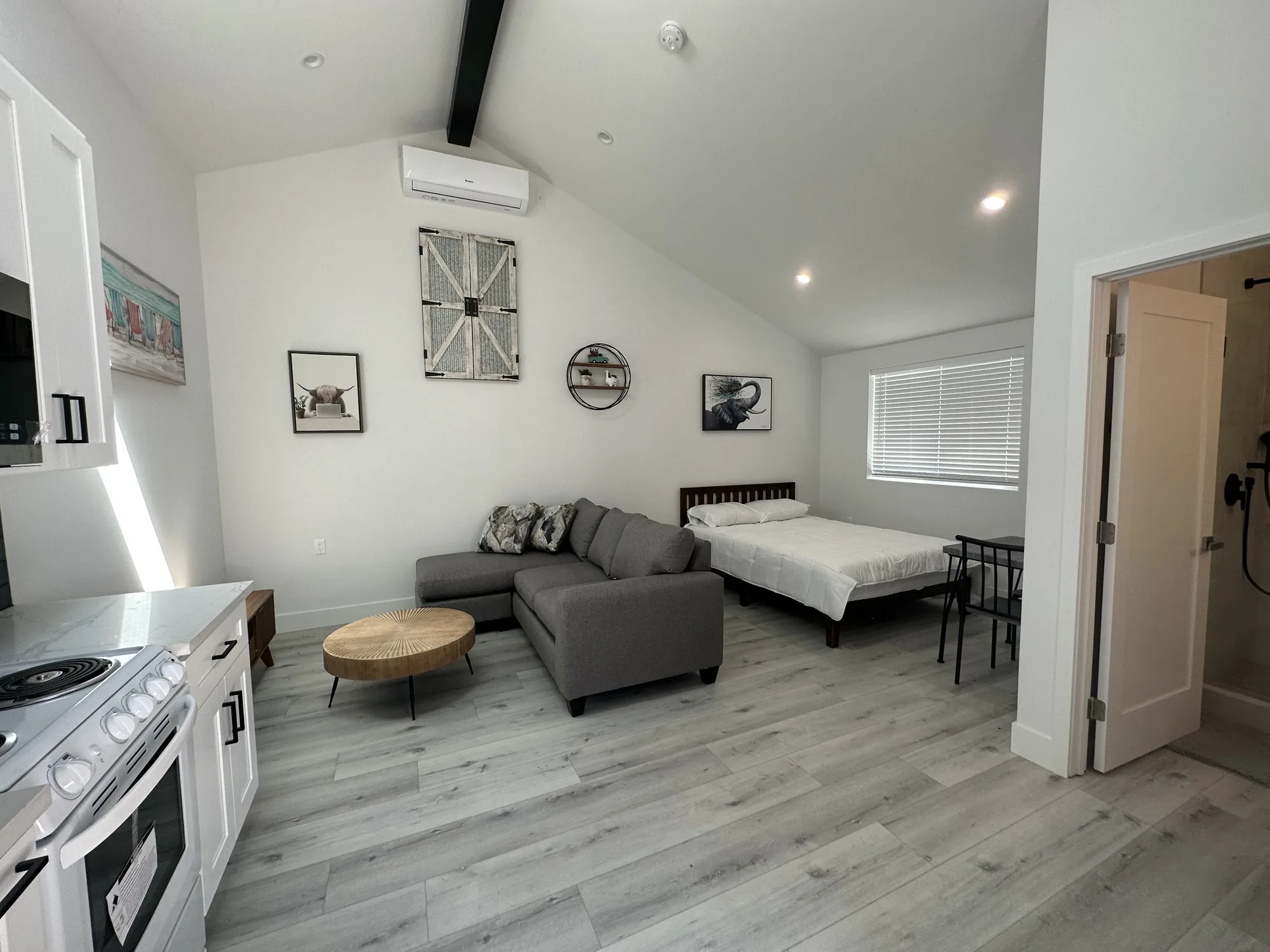
An ADU and a home addition both add value, but in different ways. An accessory dwelling unit is a separate, self-contained living space with its own kitchen and bath, making it ideal for rental flexibility and multigenerational living. A traditional addition expands your existing home’s footprint or upper floor. The best choice depends on your goals, lot, and budget.
ADU vs. Home Addition: What’s the Difference?
An accessory dwelling unit (ADU) is a fully independent living space with its own entrance, kitchen, bathroom, and living area. It can be detached like a backyard cottage, attached to the main house, or converted from an existing space such as a basement or garage.
A home addition expands your existing house — adding a new bedroom, a larger kitchen, a primary suite, or even a full second story — but the new space stays part of your main home and shares its systems and entrance. If you are weighing ADU construction against a traditional home addition, the right answer comes down to how you plan to use the space.
Comparing Value, Cost, and Flexibility
Both projects add usable square footage and can increase your home’s value, but they do it in different ways. An ADU creates a self-contained unit that can serve as a rental, a guest house, or a private space for family. An addition enhances the home you already live in.
| Factor | ADU | Home Addition |
|---|---|---|
| Independent living space | Yes — own kitchen, bath, and entrance | No — integrated into the main home |
| Rental potential | Strong — can be leased separately where allowed | Limited — not a separate unit |
| Multigenerational living | Excellent — privacy and independence | Good — connected to the household |
| Expands the main home | No | Yes — more rooms or a bigger floor plan |
| Structural complexity | Varies by type (detached vs. conversion) | Varies by scope (single room vs. second story) |
| Best for | Income potential and flexible, private space | Growing families who want more room in one home |
Rather than quote figures that vary widely by design and site conditions, we prefer to walk you through the specific cost drivers during a free estimate.
Why the Seattle Area Is ADU-Friendly
Washington has moved to make ADUs easier to build, and many Eastside and Seattle-area jurisdictions have relaxed rules that once limited them. Cities have generally streamlined approvals, reduced parking requirements, and allowed more homeowners to add a second unit on their lot.
Regulations still vary from one city to the next, so specifics such as size limits, setbacks, and owner-occupancy rules should always be verified with your local jurisdiction. As a design-build contractor, we typically confirm what your property allows before design begins, so your plans reflect current local rules.
When a Home Addition Makes More Sense
An ADU is not always the better fit. If your goal is simply more room — a larger kitchen, an extra bedroom, a home office, or a primary suite — a home addition keeps everything under one roof and integrated into your daily living space.
Additions also tend to make sense when your lot is too small or too constrained for a detached unit, or when you want the new space to flow directly from your existing floor plan. Building up with a second story, for example, can add substantial living area without a separate entrance or kitchen.
How to Decide: A Simple Framework
Use your primary goal to guide the decision:
- Want rental flexibility or income potential? An ADU is usually the stronger fit because it functions as a separate unit.
- Housing aging parents or adult children? An ADU offers privacy and independence; an addition keeps family closely connected.
- Simply need more space in your current home? A home addition is typically the more direct solution.
- Working with a tight or sloped lot? Building up or out may be more practical than a detached unit.
Every property is different. Call Sky Pro Remodeling at (206) 825-2773 to talk through your goals and schedule a free, no-pressure estimate.
Frequently Asked Questions
Does an ADU or a home addition add more value?
Both can increase your home’s value, but they do it differently. An ADU adds a separate, income-capable unit, while an addition enlarges your existing living space. The stronger investment depends on your goals, your lot, and local demand. We can help you weigh the options during a free estimate.
Can I rent out an ADU in the Seattle area?
In many cases, yes — Washington has become more ADU-friendly, and numerous Eastside and Seattle-area cities allow homeowners to rent an accessory dwelling unit. Rules vary by jurisdiction, however, so it is important to verify current requirements with your city or let your contractor confirm them.
Is an ADU cheaper than a home addition?
Not necessarily. Costs for both depend on size, design, site conditions, and how much new plumbing, electrical, and structural work is involved. A garage or basement conversion may cost less than a detached ADU, while a large addition can rival a small ADU. We provide a detailed, transparent estimate for free.
How long does it take to build an ADU or addition?
Timelines vary with design, permitting, and scope. Permitting on the Eastside is often the least predictable phase. A straightforward conversion may move faster than new construction or a second-story addition. As a design-build team, we manage the process end to end and give you a realistic schedule up front.
Get a Free Estimate from Sky Pro Remodeling
Serving Bellevue, the Eastside, and greater Seattle. Tell us about your project and we’ll help you plan the next step.