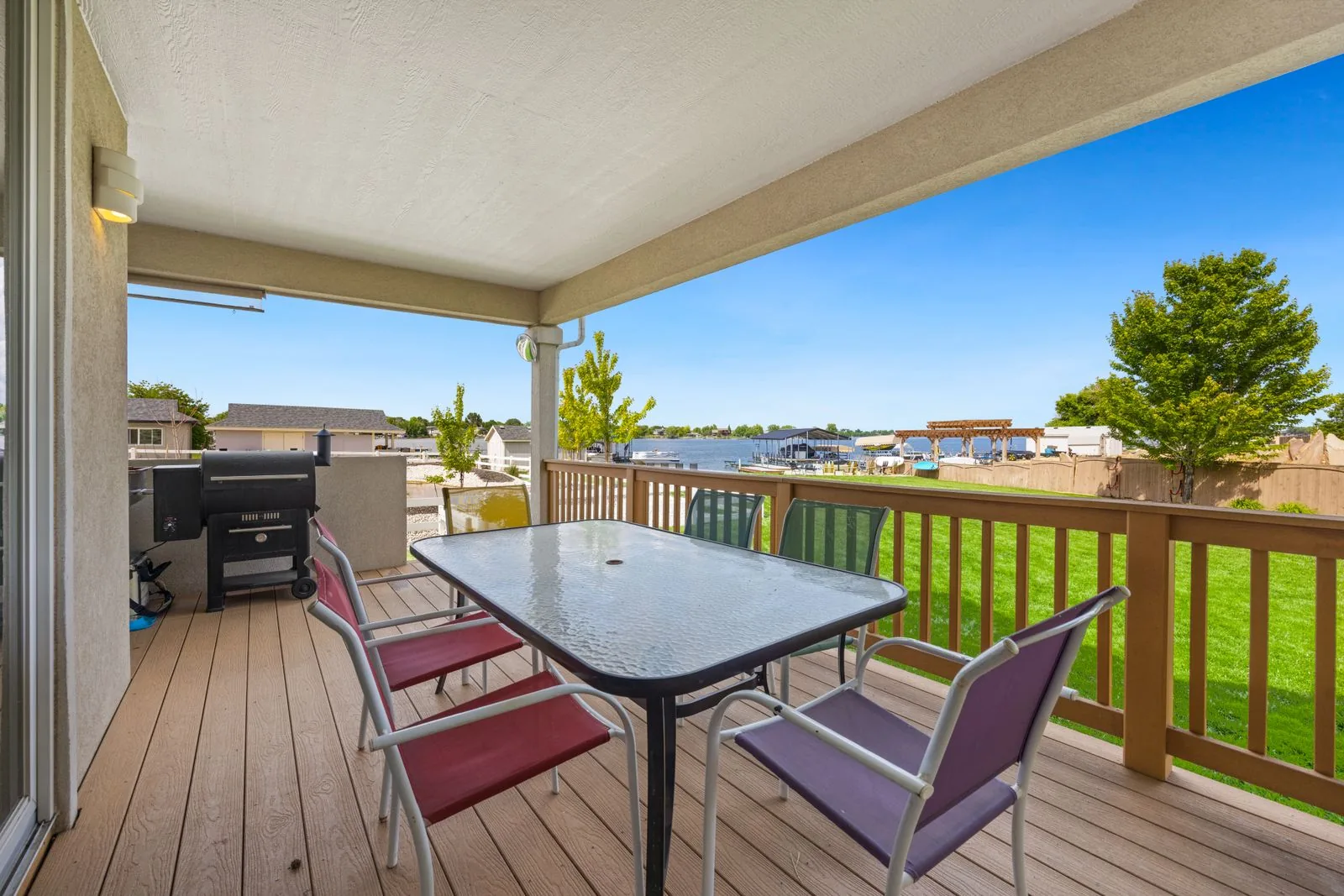
A deck’s cost is driven by its size, height, and materials more than anything else. An elevated deck needs more framing, footings, stairs, and railings than a ground-level one, and composite or hardwood costs more than pressure-treated lumber. Site slope, foundation work, and add-ons like lighting or built-in seating also move the total. A free estimate is the only way to price your project accurately.
Size and Shape: The Foundation of Your Deck Budget
Square footage is the starting point for every deck estimate. A larger deck requires more decking boards, more framing lumber, more fasteners, and more labor hours, so cost scales closely with size.
But bigger isn’t the only variable. The shape matters too. Simple rectangles are efficient to build, while curves, multiple levels, angles, and wrap-around designs add cutting, framing complexity, and time. A modestly sized but intricate deck can cost more than a larger, straightforward one.
Height and Elevation: Ground-Level vs. Elevated Decks
How far your deck sits off the ground has a major impact on cost. A low, ground-level platform is relatively simple. An elevated deck — common on the sloped lots throughout the Eastside — needs taller support posts, more substantial framing, guardrails, and a staircase to reach grade.
Elevated builds also introduce safety requirements like code-compliant railings and proper structural connections, all of which add materials and labor. The higher and more complex the structure, the more the budget grows.
Materials: From Pressure-Treated to Composite
Decking material is one of the largest and most flexible line items. Your options generally range from budget-friendly to premium:
- Pressure-treated lumber — the most economical decking surface.
- Cedar — a mid-range, naturally beautiful regional favorite.
- Composite — a higher upfront cost offset by very low maintenance.
- Tropical hardwoods — a premium, high-durability option.
Framing, fasteners, and hardware add to the material total as well. If you’re comparing surfaces, our guide to wood deck installation can help you weigh looks, upkeep, and longevity alongside price.
Structural Elements: Footings, Railings, and Stairs
What you don’t see often drives cost as much as the surface you walk on:
- Footings and foundation — the number, depth, and type of concrete footings depend on soil, load, and local code.
- Railings — the material you choose (wood, metal, cable, or glass) dramatically changes the price per linear foot.
- Stairs — every run of stairs adds framing, treads, and railing, making them one of the more labor-intensive components of a deck.
Site Conditions, Slope, and Access
Your yard itself influences the estimate. A steep slope, uneven grade, or rocky soil complicates footings and framing. Poor access — a narrow side yard, a tight urban lot, or landscaping that must be protected — slows material handling and adds labor.
Existing conditions matter too. If an old deck must be demolished and hauled away, or if utilities, tree roots, or drainage issues sit in the build zone, those add steps before construction even begins. Homes across the Eastside, from Bellevue to Renton, sit on widely varied terrain, which is exactly why an on-site evaluation matters.
Built-in Features and Getting an Accurate Number
Custom features turn a basic deck into a true outdoor living space, and each one adds to the budget:
- Built-in benches and planters
- Deck lighting (stair, post-cap, and railing lights)
- Pergolas or shade structures
- Privacy screens and skirting
- Outdoor kitchens, fire features, or hot-tub reinforcement
Here’s how the main factors tend to influence the overall budget:
| Cost Driver | Typical Impact on Budget |
|---|---|
| Deck size & shape | High |
| Height / elevation | High |
| Decking material | High |
| Railings & stairs | Moderate to high |
| Site slope & access | Variable |
| Built-in features | Scalable add-on |
Because these factors combine differently on every property, the only way to get a reliable number is an on-site assessment. Our team provides transparent, itemized pricing — see our deck installation services or call (206) 825-2773 for a free estimate tailored to your yard.
Frequently Asked Questions
Does a bigger deck always cost more?
Generally yes, since more square footage means more materials and labor. But design complexity matters too. A smaller deck with curves, multiple levels, or custom features can cost more than a larger, simple rectangle.
Is composite decking more expensive than wood?
Composite usually costs more upfront than pressure-treated or cedar wood. However, its very low maintenance can make it more economical over the deck’s lifetime, since you avoid years of sealing and repairs.
Why do elevated decks cost more than ground-level ones?
Elevated decks need taller posts, heavier framing, code-compliant guardrails, and stairs to reach the ground. Those added structural and safety requirements increase both materials and labor.
How can I get an accurate price for my deck?
The most reliable way is a free on-site estimate. A contractor can assess your size, materials, slope, and features, then provide itemized pricing. Call Sky Pro Remodeling at (206) 825-2773 to schedule one.
Get a Free Estimate from Sky Pro Remodeling
Serving Bellevue, the Eastside, and greater Seattle. Tell us about your project and we’ll help you plan the next step.